
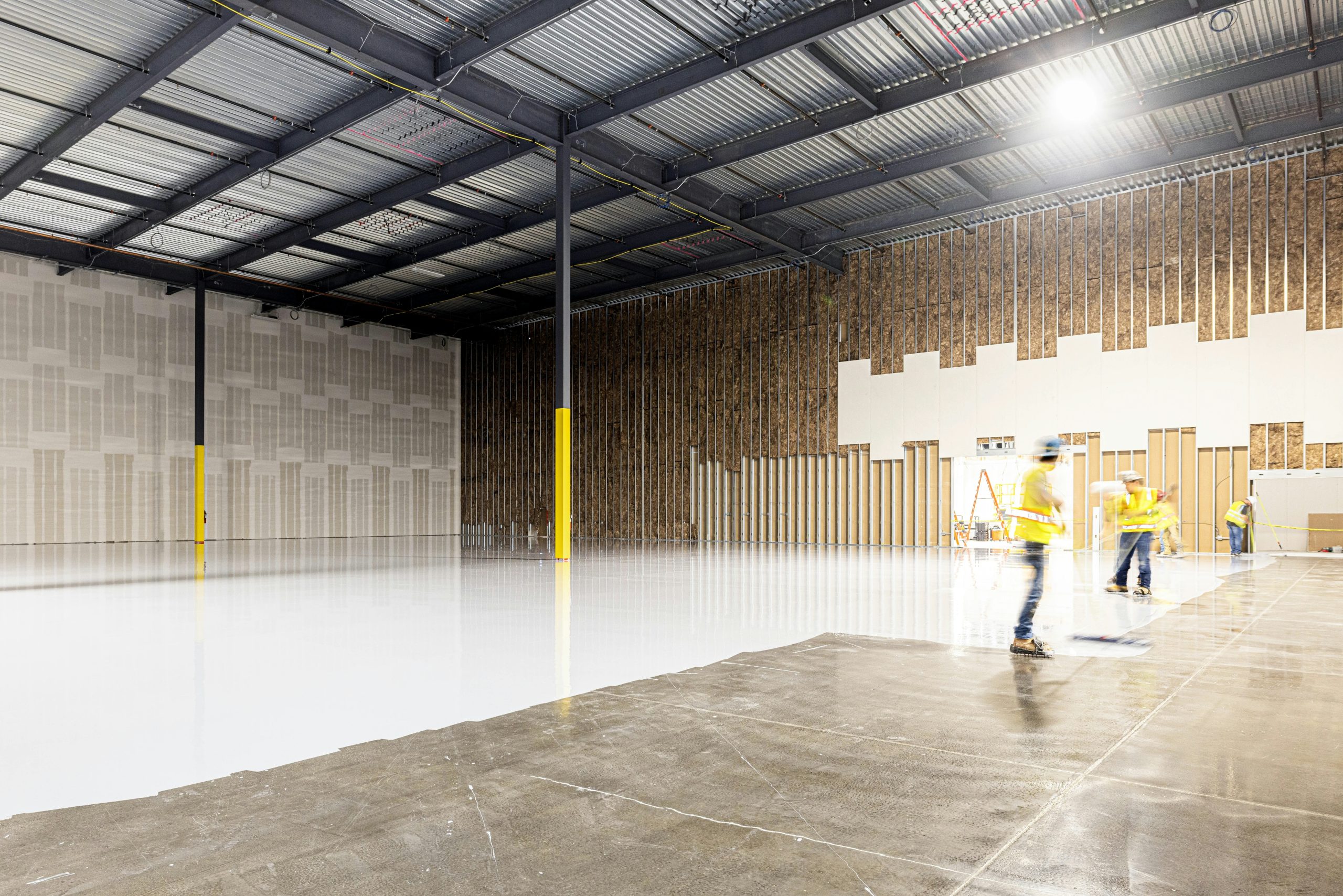
The WELL certification ensures a building supports the well-being of occupants. In addition to designing a mechanical ventilation system and installing sensors to detect and remove toxins from finished spaces, it’s equally critical to limit exposure to harmful volatile organic compounds (VOCs) to make properties safer for human health.
The adoption of GREENGUARD- and FloorScore®-certified products eases the path toward earning the WELL credential. So, what’s the difference between the two certifications? Understand WELL certification’s VOC thresholds and the merits and limitations of GREENGUARD vs. FloorScore.
Image: Unsplash
How Does the WELL Certification Minimize VOC Levels?
The International WELL Building Institute (IWBI) requires building contractors using wet-applied products to minimize VOC emissions, which can be present in paints, sealants and adhesives. These materials must have undergone testing to meet the methods and VOC content thresholds established by any of the organization’s specified regulations or standards, such as the South Coast Air Quality Management District SCAQMD Rule 1168.
This regulation sets the maximum allowable amount of VOCs in coatings, sealants and primers, requiring manufacturers to develop formulations significantly less detrimental to human health. The IWBI considers it reliable, as the California regional agency requires manufacturers and private labelers to report quantity and emission reports every three years through 2025 and then every five years thereafter.
Most of the products by volume or surface area must also meet the methods and thresholds set by IWBI’s preferred regulatory frameworks for VOC emissions, such as the California Department of Public Health (CDPH) Standard Method version 1.2 and any acceptable compliance path to satisfy the Leadership in Energy and Environmental Design (LEED) version 4.1 standard’s requirements for “Low-Emitting Materials.”
Moreover, the public benefit corporation restricts VOC emissions from furniture, architectural and interior products. Builders must use supplies that are independently tested in accordance with the methods and thresholds established by IWBI’s industry standards or regulations. Thresholds depend on cost or surface area and vary by category.
IWBI is particular about material transparency. Ingredient disclosure is required for select permanently installed products through the organization’s approved means of product declaration and third-party certifications.
What Is the GREENGUARD Certification?
GREENGUARD is a certification developed by UL for demonstrating compliance with chemical emissions standards. This program applies to a wide variety of product groups, including building materials, flooring, interiors, furniture, electronics, mattresses and cleaning supplies.
To be GREENGUARD-certified, products must meet rigorous testing standards, such as UL 2818, to screen for over 15,000 VOCs known to cause indoor air pollution. This certification has been instrumental in complying with the Business and Institutional Furniture Manufacturers Association x7.1 standard. At the same time, its criteria have served as a basis for earning a LEED credit for low-emitting furniture since 2002.
The GREENGUARD Gold certification has higher standards. It limits the emissions of over 360 VOCs and prohibits those of other chemicals for the benefit of sensitive individuals. GREENGUARD Gold-certified products are more suitable for spaces where children’s safety is a top priority, such as nurseries, schools and health care facilities. The program’s stricter VOC emission limits satisfy the demanding requirements of the CDPH Standard Method version 1.2.
What Is the FloorScore Certification?
FloorScore is a certification developed by SCS in collaboration with the Resilient Floor Covering Institute. This credential applies to hard surface flooring materials, adhesives and underlayments, including bamboo, cementitious, ceramic, cork, engineered hardwood, laminate, linoleum and luxury vinyl tile flooring. Products bearing the FloorScore label have low VOC content, ensuring they meet strict indoor air quality standards, especially for health-conscious individuals.
SCS uses impartial ISO-17025-accredited labs to test product samples for 35 individual chemicals specified by the CDPH Standard Method version 1.2.
Flooring manufacturer suppliers can apply for the FloorScore Private Label certification to receive a unique SCS certificate. SCS adds FloorScore-certified private label products to its Green Products Guide database.
Which Matters More in WELL Building Certification — GREENGUARD or FloorScore?
The criteria of GREENGUARD and FloorScore share similarities and differences, but both can help commercial real estate developers and design-build firms earn points toward WELL certification.
The GREENGUARD certification has a broader scope, covering a wider range of products. In contrast, only flooring can be FloorScore-certified. Flooring manufacturers can simultaneously apply their eco-friendly products to both programs to demonstrate sustainability to discerning construction professionals.
However, targeting the GREENGUARD Gold certification may be necessary for climate resilience. Policymakers may tighten restrictions on VOC presence in commercial properties years from now.
While adopting a cloud-based building performance monitoring platform like Bee Sense is essential to tracking diverse pollutant levels, choosing UL-certified products with the GREENGUARD Gold label is key to futureproofing sustainable buildings.
Make no mistake, these sustainability certifications rarely indicate zero VOCs. They only ensure the tested and approved products emit safer levels of harmful chemicals. The ultimate sources of information on VOC content in building supplies are manufacturers’ production specification sheets and third-party lab results. Although construction professionals should never use these stamps of approval to presume zero-VOC content when sourcing supplies, these certifications make sustainable procurement easier. It’s worth noting that material selection achieves optimal results when combined with sustainable design practices like proper ventilation and continuous insulation, which help manage VOC levels and prevent moisture accumulation regardless of certification. However, for procurement purposes, GREENGUARD Gold remains the more comprehensive standard for future-proofing projects against evolving IAQ regulations.
Obtain WELL Certification to Promote Building Occupant Health
Low-VOC building supplies are vital in earning WELL certification. IWBI’s penchant for third-party standards underscores the value of GREENGUARD- and FloorScore-certified products. Although construction professionals should never use these stamps of approval to presume zero-VOC content when sourcing supplies, these certifications make sustainable procurement easier.